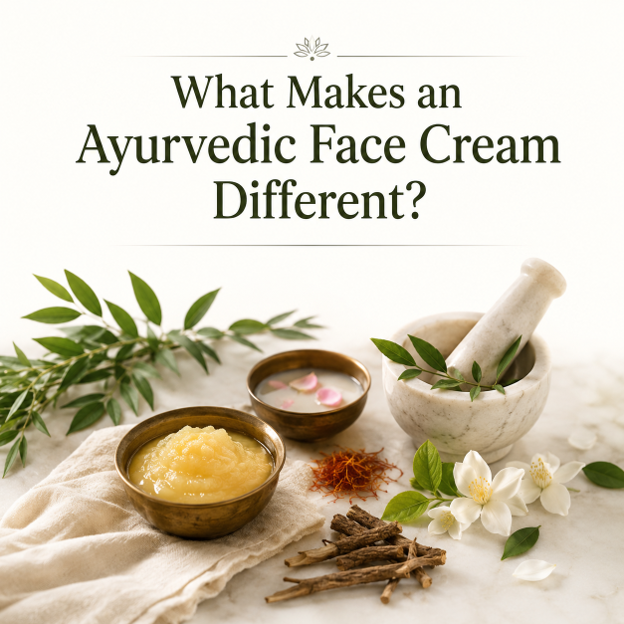
Skincare has evolved significantly over the years, with countless creams promising hydration, radiance, and healthier-looking skin. Alongside modern formulations, traditional skincare practices have also gained renewed attention, particularly Ayurveda, which has guided natural wellness for centuries. Among the many Ayurvedic skincare products available today, face creams remain one of the most widely used because they help maintain skin hydration and support everyday skin care routines.
If you’ve been searching for the best ayurvedic face cream, you’ve likely come across ingredients like shata dhauta ghrita, saffron, manjistha, aloe vera, and other botanical extracts. Understanding these ingredients and the philosophy behind Ayurvedic skincare can help you better understand what makes these formulations unique. This guide explores how Ayurvedic face creams differ from conventional moisturizers, the role of shata dhauta ghrita, and why these traditional formulations continue to be relevant in modern skincare.
What Is an Ayurvedic Face Cream?
An Ayurvedic face cream is a moisturizer inspired by the principles of Ayurveda, India’s traditional system of holistic wellness. Unlike many conventional moisturizers that rely primarily on synthetic ingredients, Ayurvedic face creams are often formulated using herbs, botanical extracts, plant oils, and traditional preparations that have been used for generations.
The goal of Ayurvedic skincare is not simply to improve the appearance of the skin but to support its natural balance. These formulations are designed to help keep the skin hydrated, comfortable, and healthy-looking through consistent daily care.
Today, many people exploring the best ayurvedic face cream are interested in understanding how these traditional ingredients contribute to everyday skincare rather than relying solely on cosmetic trends.
How Does Ayurveda Approach Skincare?
Ayurveda considers skincare as an extension of overall wellness. Instead of focusing only on visible concerns, it emphasizes maintaining balance through proper daily routines, nourishment, and suitable ingredients.
Traditional Ayurvedic skincare often includes:
- Natural herbs
- Plant extracts
- Botanical oils
- Traditional preparations
- Gentle cleansing practices
- Regular moisturization
This holistic philosophy encourages long-term skin care rather than quick cosmetic fixes. While modern skincare technologies continue to evolve, many Ayurvedic ingredients remain popular because of their long history of topical use.
What Is Shata Dhauta Ghrita?
Among traditional Ayurvedic skincare ingredients, shata dhauta ghrita is one of the most distinctive.
The term literally translates to “hundred-times washed ghee.” It is prepared by repeatedly washing pure cow ghee with clean water until its texture transforms into a smooth, light, cream-like emulsion.
This traditional process changes both the texture and consistency of the ghee, making it easier to apply to the skin. Rather than feeling heavy like ordinary clarified butter, shata dhauta ghrita develops a soft, cooling texture that has traditionally been valued in Ayurvedic topical applications.
Because of these characteristics, it continues to be included in many modern Ayurvedic skincare formulations.
Why Is Shata Dhauta Ghrita Used in Face Creams?
The popularity of shata dhauta ghrita comes from both its traditional heritage and its physical properties.
It is commonly included in Ayurvedic face creams because it:
- Helps moisturize the skin.
- Has a naturally smooth texture.
- Feels cooling when applied.
- Spreads easily across the skin.
- Works well alongside botanical extracts.
- Supports comfortable daily moisturization.
Modern formulations often combine shata dhauta ghrita with ingredients like aloe vera, saffron, manjistha, green tea, or shea butter to create balanced skincare products suitable for regular use.
Common Ingredients Found in Ayurvedic Face Creams
Ayurvedic face creams rarely rely on a single ingredient. Instead, they combine multiple botanical ingredients that complement one another.
Some commonly used ingredients include:
Shata Dhauta Ghrita
Traditionally valued for its moisturizing and cooling properties.
Aloe Vera
Widely known for providing lightweight hydration.
Manjistha
A well-known Ayurvedic herb frequently used in skincare formulations.
Saffron
Traditionally associated with improving the appearance of skin radiance.
Green Tea Extract
Contains naturally occurring antioxidants commonly used in skincare.
Vetiver
Included in many Ayurvedic products for its soothing qualities.
Shea Butter
Helps reduce moisture loss and supports skin softness.
Each ingredient contributes differently depending on the formulation, making ingredient combinations an important part of Ayurvedic skincare.
How Are Ayurvedic Face Creams Different from Conventional Moisturizers?
Both Ayurvedic face creams and conventional moisturizers are designed to hydrate the skin, but their ingredient philosophies often differ.
Conventional moisturizers commonly include:
- Synthetic emollients
- Silicones
- Laboratory-developed moisturizing agents
- Artificial fragrances
- Preservatives
Ayurvedic face creams are more likely to contain:
- Botanical extracts
- Herbal ingredients
- Plant oils
- Traditional preparations such as shata dhauta ghrita
- Naturally inspired formulations
Although both types of products can support skin hydration, Ayurvedic skincare focuses more heavily on traditional botanical ingredients.
Can Different Skin Types Use Ayurvedic Face Creams?
Every skin type has different hydration needs, and Ayurvedic formulations are available in a variety of textures to suit those differences.
Dry Skin
Often benefits from richer moisturizing ingredients that help reduce dryness.
Oily Skin
Usually prefers lighter formulations that hydrate without feeling heavy.
Combination Skin
Needs balanced hydration across different areas of the face.
Sensitive Skin
May benefit from gentle formulations with carefully selected ingredients.
Choosing skincare based on individual skin needs is often more important than following trends or marketing claims.
How Should Ayurvedic Face Cream Be Used?
Although formulations vary, most Ayurvedic face creams are used in a similar way.
A simple routine includes:
- Cleanse the face using a gentle cleanser.
- Pat the skin dry.
- Apply a small amount of cream.
- Massage gently using upward circular motions.
- Allow the product to absorb fully.
- Apply sunscreen during the daytime if needed.
Regular use as part of a daily skincare routine helps maintain consistent skin hydration.
Why Are Ayurvedic Face Creams Becoming More Popular?
Growing interest in natural skincare has encouraged many people to learn more about traditional ingredients and formulations.
Several factors contribute to this renewed popularity:
- Increased awareness of Ayurvedic skincare.
- Interest in plant-based ingredients.
- Preference for simple skincare routines.
- Appreciation of traditional wellness practices.
- Greater focus on long-term skin health.
As consumers become more informed, they often research ingredients before selecting skincare products, leading many to explore the best ayurvedic face cream and traditional ingredients such as shata dhauta ghrita.
Conclusion
Ayurvedic skincare combines centuries of traditional knowledge with ingredients that continue to be valued in modern formulations. Understanding what makes an Ayurvedic face cream different—from its botanical ingredients to traditional preparations like shata dhauta ghrita—helps explain why these products remain popular today. If you’re researching the best ayurvedic face cream, learning about its ingredients, preparation methods, and skincare philosophy provides a stronger foundation for understanding how Ayurvedic moisturizers fit into a balanced daily skincare routine.